Inside the 2024 CVO Road Glide ST’s Electronics
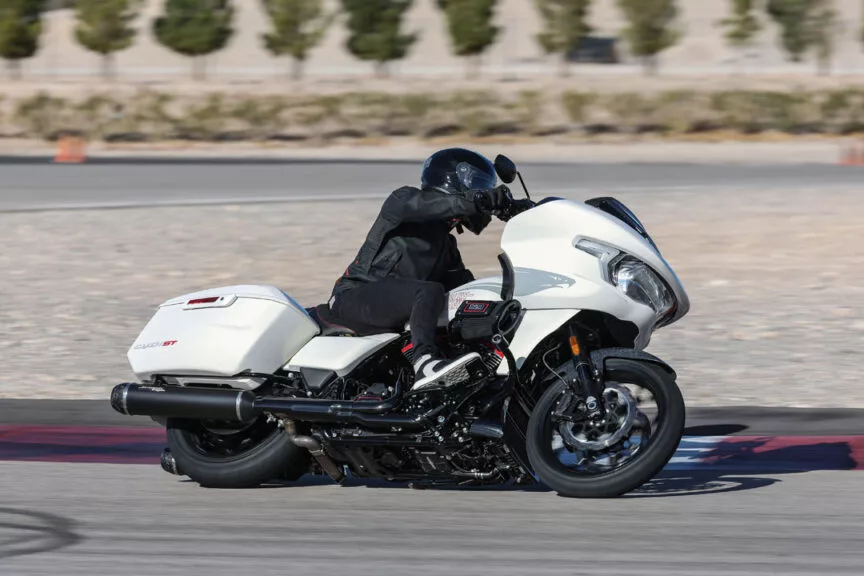
Born from the Mission King of the Baggers series of MotoAmerica, the new 2024 Harley-Davidson CVO Road Glide ST takes the concept of performance cruiser to an all-new level with shrewd mechanics mated to smart electronics. Unlike the previous versions of performance cruisers from 20-years past, the CVO Road Glide ST wasn’t developed from the street up, but from the race track down by the Harley-Davidson Factory Racing Team. It’s a real-live sportbike that defies conventions and cultures of performance and redefines baggers.
The Hard Parts
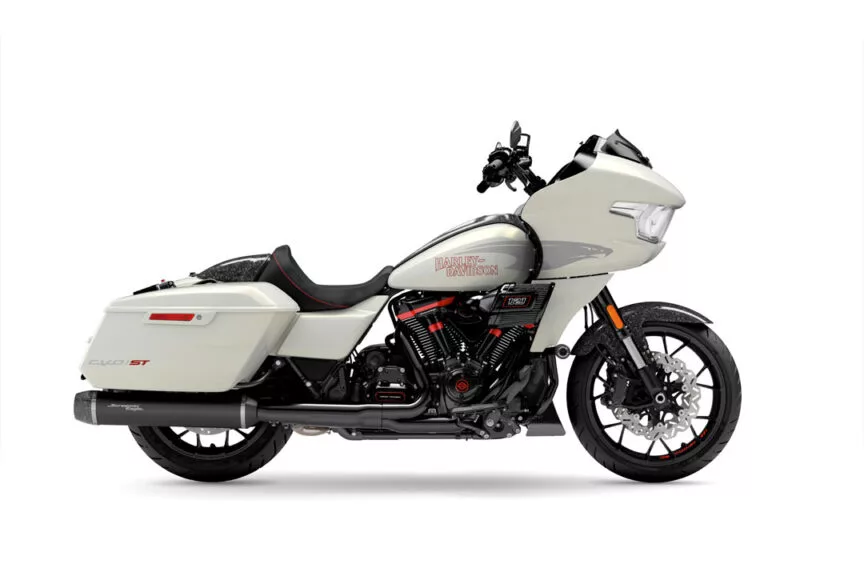
Before we get to smart software and aggressive algorithms, let’s quickly consider the solid parts. The 121 cubic-inch (1977cc) High Output (HO) V-twin of the 2024 CVO Road Glide ST puts out 12-more hp and six-more ft lbs of torque than the standard CVO Road Glide, for a total of 127 hp and 145 ft lbs torque. This results primarily from hotter cams, a high-performance intake system, and an increased redline to 5,900 rpm and, of course, ECU mapping. Please note, while the standard CVO Road Glide has the cool feature of Variable Valve Timing (VVT), the ST is without that complication. That’s because the ST is all about maximum raw horsepower. The standard version is about a comfortable, nice and easy power band, while the ST is proudly nice and rough, as a performance bike should be.
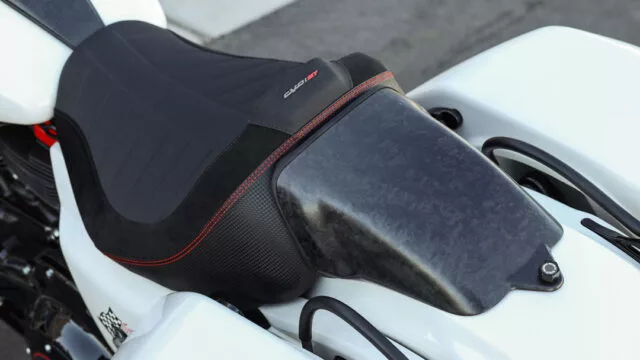
Weight was trimmed by use of carbon-fiber for some body parts, and there are no passenger accommodations, from seat to floorboards. It rolls on cast aluminum wheels rather than tubeless wire wheels. The mufflers are high-flow titanium with carbon fiber end caps for maximum power while meeting noise and emissions compliance. The ST sports a frame protector bar for moderate tip-overs, because, you know, things happen. The package is 25 pounds lighter than its sister Road Glide and six pounds lighter than the 2023 ST. The ST is available in Golden White Pearl or Raven Black, because there’s nothing grey about the ST. But sadly, top speed is electronically limited to 120 mph. Damn. Aftermarket tuners are likely already on this.
Because suspension is as critical to performance as is an engine, the CVO Road Glide ST has some of the best components ever found on a showroom Harley-Davidson. It’s SHOWA at both ends with a pair of piggyback-reservoir shocks out back, for reduced heat fade or cavitation. The shocks are fully adjustable for preload and compression and rebound damping. The inverted SHOWA fork legs with Diamond-Like Carbon (DLC) coating, for reduced stiction, and feature a one-by-one damping with the right fork leg providing rebound damping, while the left leg provides compression damping. Braking is by Brembo radial-mounted calipers mated to wave rotors for maximum control and heat dissipation.
The Soft Parts
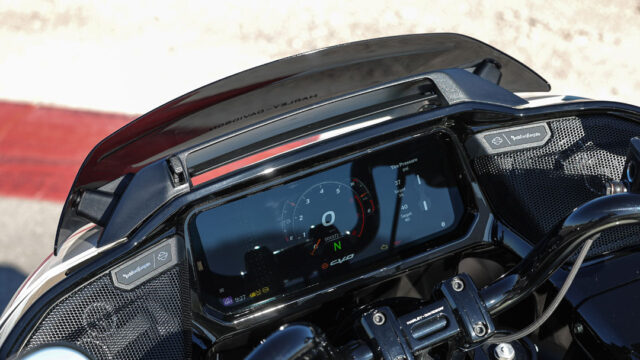
What really sets the 2024 CVO Road Glide ST apart from history are its high-tech eclectic electronic features, tuned for maximum no-frills and all-thrills performance. For frills there is the Skyline OS Infotainment system. The interface for riders to all the electronic features is a customizable, giant 12.3-inch TFT full-color touch screen that includes every gauge and possible bit of information a rider desires. Magically, fingerless gloves aren’t necessary, and one can also use the mechanical buttons on the conventional switch-gear hand controls. The system of course has an AM/FM radio, for totally old-school riders. Beyond that, the system can be mated to audio with an SD Card, Flash Drive, or MP3 player by USB or, of course, a smart phone. A smart phone is also useful for zapping the offered QR code for the Help function. Don’t be frightened, the logic is intuitive. The display can be set into any of 30 different languages, para tu placer.
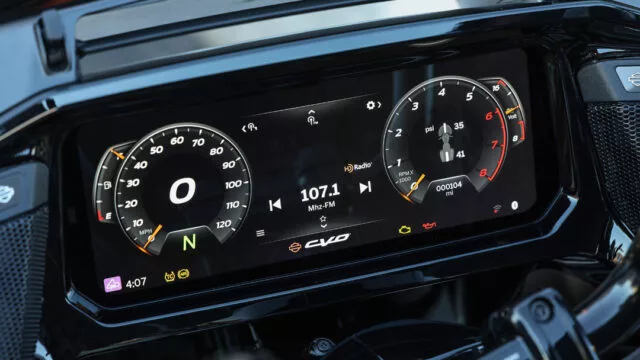
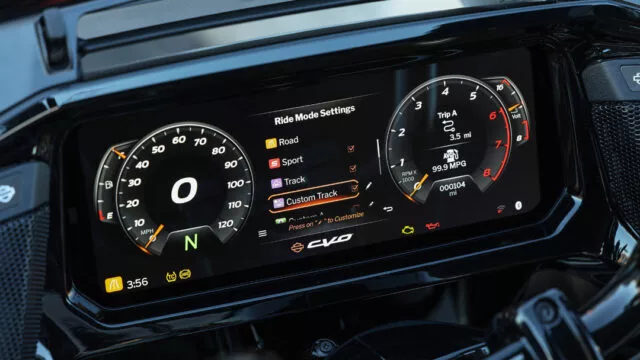
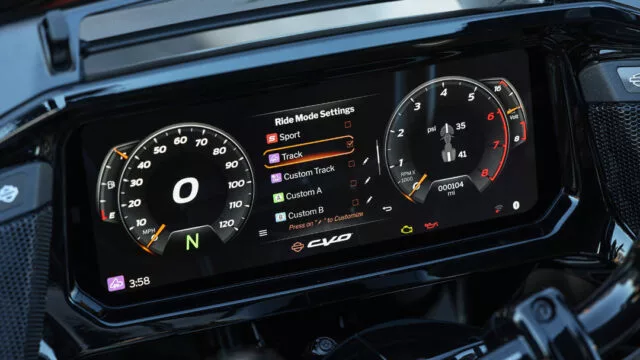
The dash display is compatible with Apple and Android smart phones, but while Apple Car(Motorcycle)Play projection is possible, Android Auto is not, though steaming music from an Android is possible.
The customizable display includes visual aesthetic options of Cruise, Sport and Tour. The Cruise display features analogue-style tach and speedometer, just like conventional mechanical gauges. Sport mode drops the speedometer, puts the tach in the center, and mph is reduced to digital numbers in the tach’s center. This allows more room for info-widgets such as audio status, trip information, fuel level, and so forth. In Tour, the dash nixes the tach, puts the speedo and widgets on the left, and is dominated by the chosen navigation map and directions. Riders can choose the “Blank” widget setting for a cleaner dash display limited to only necessary information. The Sport and Tour displays allow for more widget options for those desiring to always know the most possible about everything. The embedded navigation system is a $350 option. iPhone users need not be concerned.
Other electronic features include a proximity fob, for security, that awakens the machine for starting. Without the fob the ST will not start and it will revert into security mode. An option is a customer-set PIN priorly created that will allow starting the bike without the fob. Either don’t lose the fob or don’t forget the code. The Vehicle Hold Control (VHC) can be locked while the ST is in gear or just while stopped, allowing a rider to remain motionless with the engine running without the need of holding onto the bars or keeping a foot on the brake lever. There is also a Tire Pressure Monitoring System (TPMS), for the amusement of those with Obsessive Compulsive Disorder (OCD).
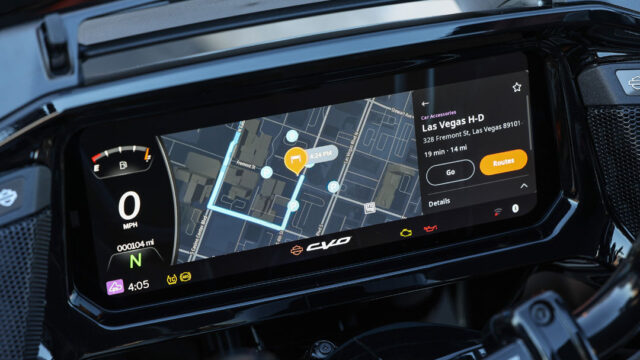
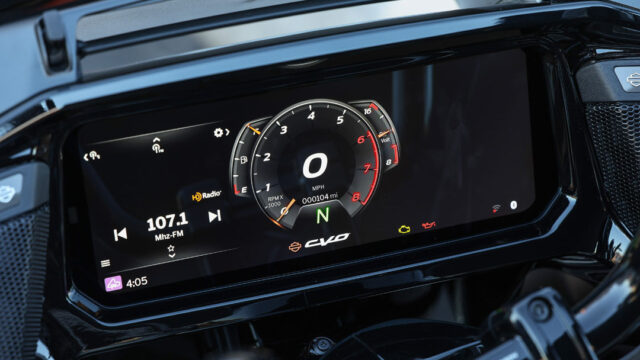
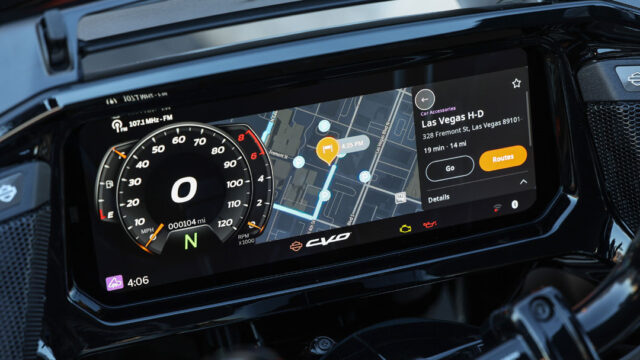
While modern motorcycles have various ride modes, the CVO Road Glide ST takes these modes to a new level, showing the breadth of its performance goals. Riders can choose between Road, Sport, or Rain modes, but also provided are two Track modes that share the algorithms the Harley-Davidson Factory Race Team uses in the Mission King of Baggers racing series. All modes except for Rain ultimately provide a rider the full 127 horsepower.
For those who haven’t heard, the factory race bikes have been clocked at well over 180 mph on the high banks of Daytona International Speedway. Bagger racing has quickly evolved into a uniquely American and serious sport. It was the only MotoAmerica class competing at the Circuit of the Americas with the world MotoGP series this year. If there was any laughter, it was of the nervous sort, not the yeah-that’s-funny sort.
The overlay of Track 1 mode is identical to Kyle Wyman’s mapping on his road racing Road Glide in the Mission King of the Baggers series. But these modes do much more than simply change the ratio of throttle movement to throttle response. The various modes also alter a combination of power delivery, engine braking, Cornering Antilock Braking (C-ABS), Cornering Traction Control (C-TCS), Cornering Enhanced Electronic Linked Braking (C-ELB), and Cornering Drag-Torque Slip Control System (C-DSCS). The first three are self-explanatory and the function of the C-DSCS is electronically managing the relationship between engine speed and wheel speed when over-aggressive downshifting goes beyond the capability of the slipper clutch.
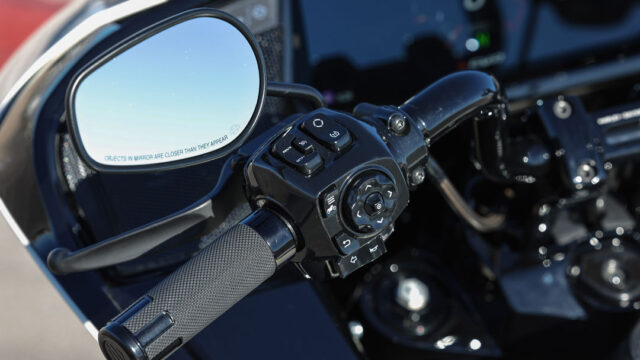
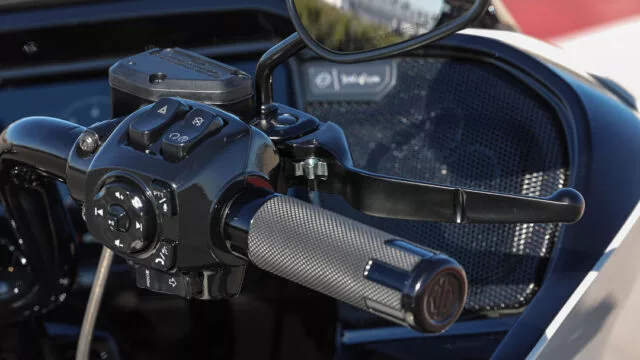
Road mode provides a balanced performance for regular riding, which we’re told some people desire. It delivers less throttle response, less mid-range power, and balanced C-ABS and C-TCS. Sport mode also gives a rider full power, but with a crisper more aggressive throttle response, the C-TCS is less intrusive and there’s increased engine braking. Rain mode is sort of the opposite of Sport, with throttle response and lower power restraining acceleration, engine braking is limited and C-ABS and C-TCS are at maximum. If these three modes do not result in rider nirvana, there are four Custom Modes where engine power delivery, throttle response, engine braking, C-ABS, and C-TCS can be modified to a rider’s personal preferences.
Track mode was developed with input by Kyle Wyman for riding on dry racetracks at track days, providing optimum mapping for power delivery and smooth predictable throttle responses. The electronically linked front and rear braking is disabled and the C-ABS and C-TCS interventions are reduced to respect greater rider input and control.
Track Plus mode is for experienced riders riding on a dry racetrack. Yes, we are still talking about a Bagger motorcycle, or what some used to refer to as a Touring motorcycle. Track Plus provides maximum rider control with minimal intervention. The C-ABS is reduced yet further, allowing a higher level of rear wheel slip under braking and aggressive downshifts, and the C-TCS is set at its lowest level to maximize raw rider input and raw physics for controlling acceleration while cornering or straight-up. It trusts the rider’s wrist.
Controlling the rider aids for the CVO Road Glide ST is a six-axis Inertial Measurement Unit (IMU) that uses the 3D knowledge it collects nearly instantaneously of the motorcycle’s dynamic activity, for managing the C-ABS and C-TCS, and other rider-aid components, when deciding on allowed progressivity of rider inputs. The IMU monitors acceleration and 3D angular rates and forces for deciding what level of intrusion is necessary based on the rider-selected mode. For example, when the rear tire is on its edge the ST knows this and power or braking is reduced as needed, within the parameters of a chosen mode. Though the system might be brilliant, a rider does need to remember that the rider aid systems cannot violate the laws of physics. Maybe in a few more years of development it will be able to master that challenge. An added advantage to all this groovy software is that it doesn’t even add an ounce to the CVO Road Glide ST’s overall weight. Please note while riding, the CVO Road Glide ST is a motorcycle, not a video game.
The 2024 CVO Road Glide ST has an MSRP of $42,999.