Custom 1983 Harley-Davidson FXR by The Cutrate Debuts at Sturgis Motorcycle Rally

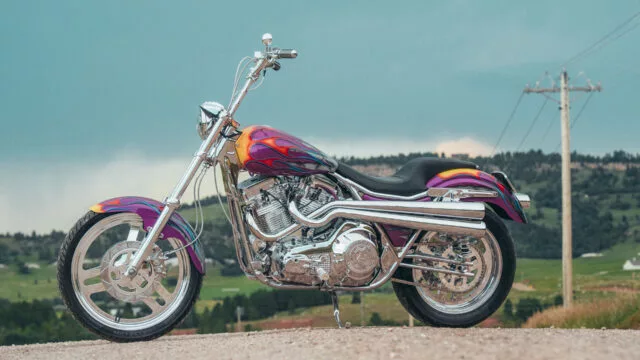
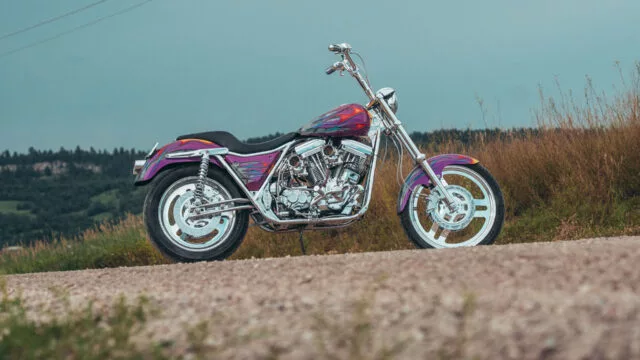
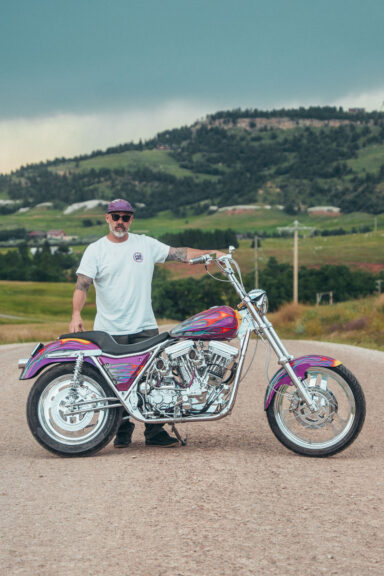
For builder Oliver Jones—better known as The Cutrate—custom motorcycles have never been about shortcuts or playing it safe. His latest project, a heavily reimagined 1983 Harley-Davidson FXR, proves exactly that. After spending nearly six years sitting dormant in his shop, the machine finally returned to the spotlight at the 85th Sturgis Motorcycle Rally, showcasing a refined vision that blends old-school FXR style with meticulous one-off engineering.
Jones’ relationship with the bike dates back to 2019 when he was invited to build a motorcycle for Born-Free 11. Already committed to producing a main build for the prestigious custom show, he decided to push himself further by creating a second motorcycle for the SDC FXR Show, a competition he had previously won. What followed was a whirlwind year in the shop.
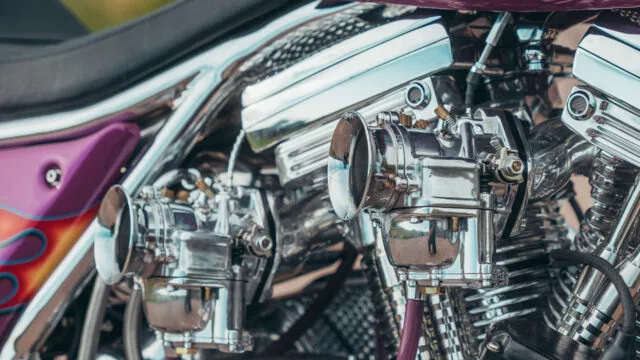
Driven by his own ambition, Jones found himself juggling four separate builds simultaneously. Among them was the chrome-framed FXR that would later become one of the most intricate projects of his career. The bike debuted at Born-Free looking visually complete, but Jones knew something wasn’t quite right.
“It was finished, but it wasn’t finished,” he recalls.
Although the fabrication, paint, and polishing were done, the motorcycle hadn’t truly been sorted as a running machine. The lingering imperfections bothered him enough that shortly after returning home from Oak Canyon Ranch, he tore the bike back down. The FXR sat on a lift in his shop—untouched—for the next six years.
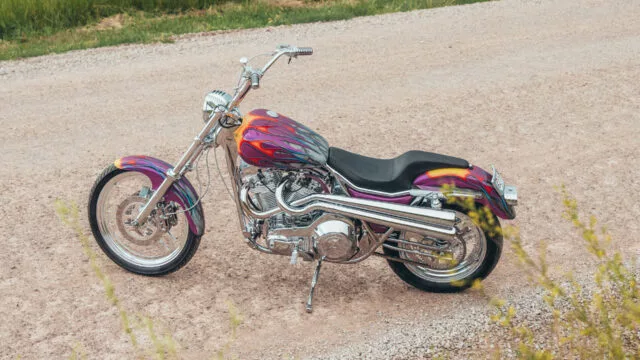
The project finally found new life when Jones was invited to join the legendary Hamsters USA, an exclusive custom motorcycle fraternity. Wanting a bike worthy of presenting to the group, he returned to the long-neglected FXR.
“It sat for so long, but this was the spark that reignited it,” Jones says. “The timing just felt right.”
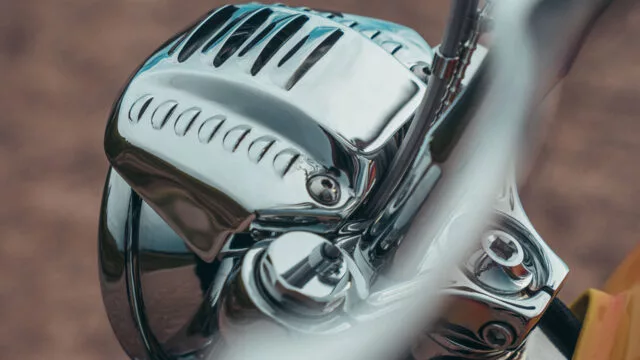
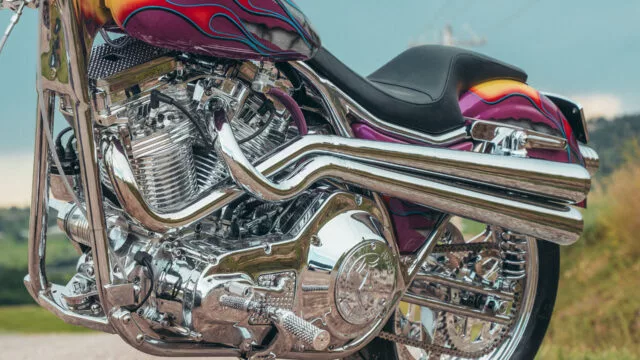
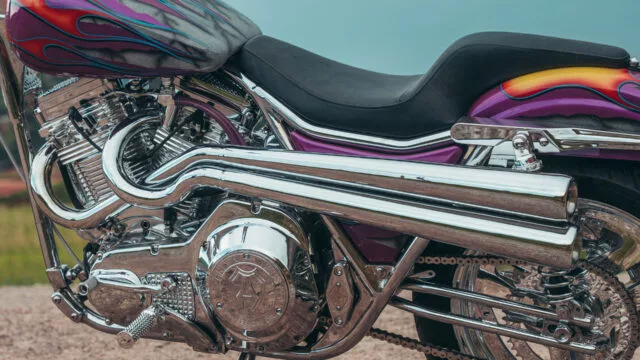
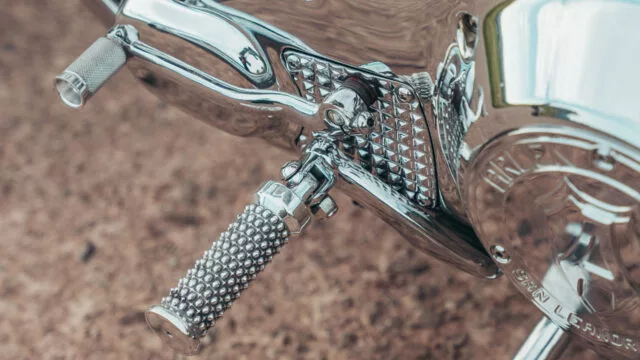
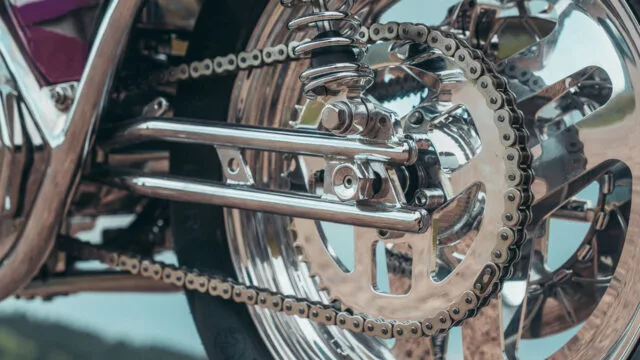
The reborn FXR is dominated by chrome and polished metal, but its true brilliance lies in the subtle details. Jones machined countless one-off components throughout the bike, even experimenting with different machining pitches to distinguish horizontal and vertical surfaces. The result is a layered visual effect that reveals new details the closer you look.
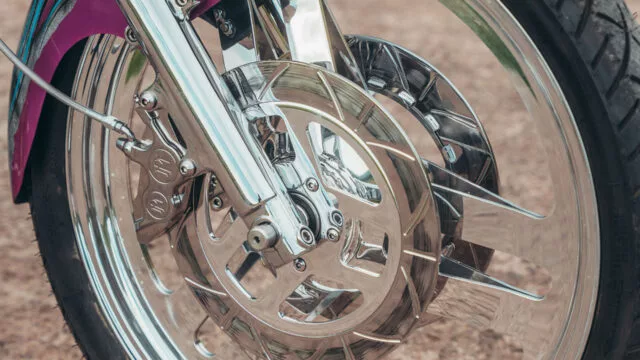
The wheels are a perfect example. Instead of sourcing aftermarket pieces, Jones fabricated them from sheets of aluminum and machined them into a design reminiscent of Performance Machine’s classic Chicane wheel. Because the sizes never existed in PM’s lineup, many builders initially assumed they were factory parts—until Jones explained they were entirely handmade.
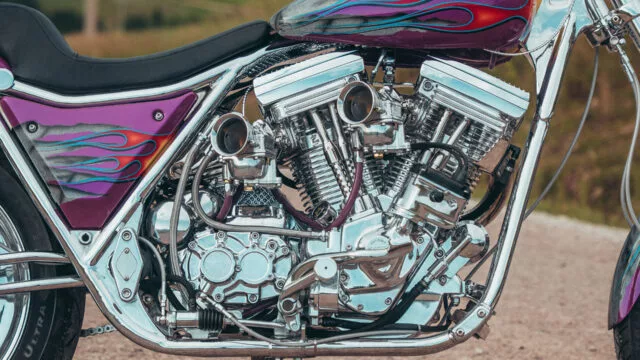
Equally impressive is the engine. The FXR runs a highly modified four-by-four Evolution-based motor, featuring a unique pairing of customized XR Sportster heads adapted to a Big Twin bottom end. Rather than simply running two front heads—a common misconception—Jones sourced rare STD castings originally produced in the 1990s for Mert Lawwill’s Evo street trackers.
Making them work required serious engineering. Pushrod angles had to be redesigned, intake and exhaust geometry reworked, and a custom Redshift camshaft commissioned to compensate for the altered valvetrain layout. Even the pistons were hand-modified to match the combustion chambers. Despite the complexity, the engine fired on the first attempt.
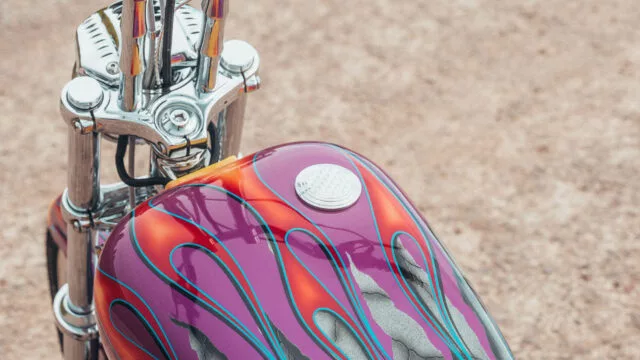
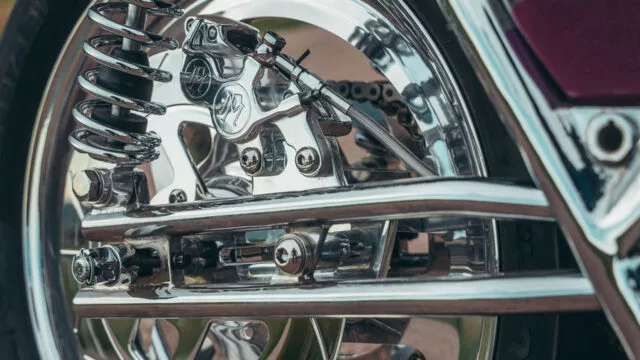
While the bike began as a competitive showpiece for Born-Free, its final form draws inspiration from the classic FXR builds Jones admired growing up. Chrome finishes, bold paint, and sharp details evoke the flash of 1990s custom motorcycles, while the fit and finish feel thoroughly modern.
The FXR may lean more toward show bike than cross-country cruiser—its aggressive exhaust routing and intricate finishes make practicality secondary—but that was never the goal.
“It was more of a design exercise,” Jones says. “A chance to push myself and create something different.”
When the motorcycle rolled into Sturgis for its second debut, most spectators had never seen the original Born-Free version. To them, the chrome-laden FXR felt entirely new. Fellow builders and enthusiasts admired the craftsmanship, even if many overlooked the tiny details Jones spent countless hours perfecting.
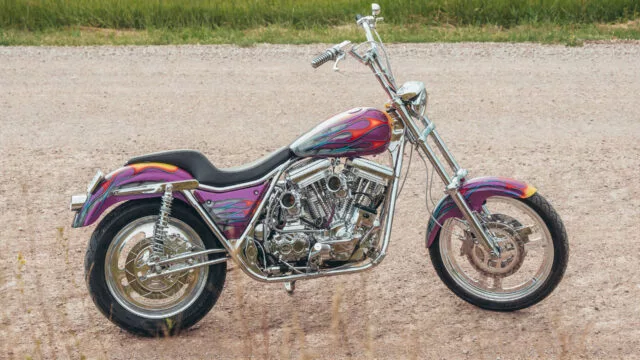
For Jones, finishing the motorcycle marked more than the completion of a project. It represented persistence, growth, and a personal milestone in his career.
Unlike many of his previous builds—which he often had to sell to stay afloat—this one holds a special place in his shop.
“I’ve had to sell every bike I ever built just to get by,” he says. “But this one, I’m keeping as long as I can.”
Six years after it was first mothballed, the FXR finally found its moment—gleaming under the South Dakota sun and proving that sometimes the best builds simply take time. HB
Photos: Alex Chapman